 The University
 Community
 Studies
 Services
 Research
 News
News Students
 Prospective Students
 Ionio.gr
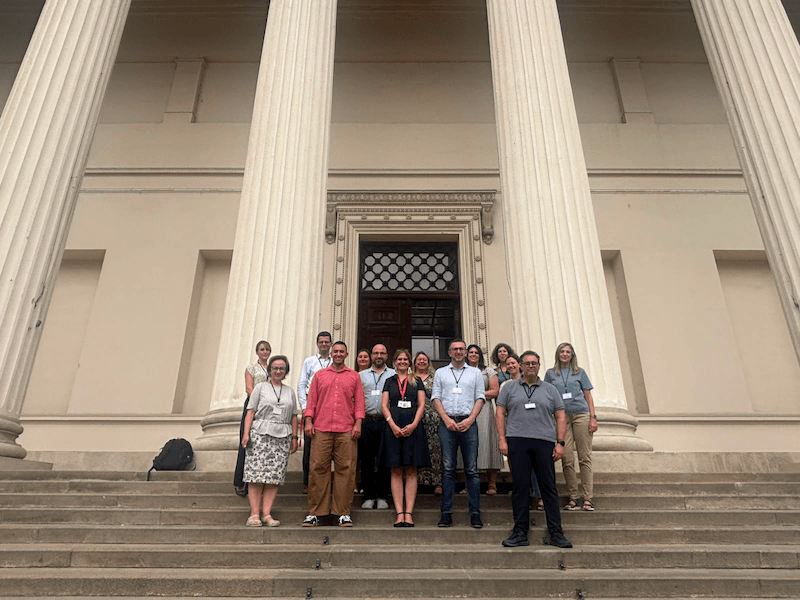
On the 14th of July, 2026, the “The Fabric of Heritage Protection: Co-creating Comprehensive Provenance Ecosystems” CPP4ALL workshop took place under the scientific responsibility of the UNESCO Chair on Threats to Cultural Heritage of the Ionian University at the Hungarian National Museum in Budapest.
Objective, scope and participation
This workshop contributed to the work of Working Group 3 (WG3) of COST Action CA24119 – Cultural Property Protection for All (CPP4ALL). It advances the WG3 mandate by exploring how provenance information can be collectively produced, shared, verified, and ethically governed across local, national, and transnational levels.
The workshop introduced and operationalized the concept of comprehensive provenance ecosystems—collaborative and transdisciplinary frameworks that connect museums, archives, researchers, source communities, legal experts, financial investigators, law enforcement actors, policymakers, and digital infrastructures. Moving decisively beyond fragmented, institution-centered models, the workshop aims to examine how provenance knowledge can be collectively produced, verified, governed, and responsibly shared across jurisdictions and sectors.
Building on the comparative legal and policy foundations established by WG1 and the digital and documentary approaches developed by WG2, WG3 examines the governance, ethics, and stakeholder architecture of comprehensive provenance systems. The workshop developed concrete frameworks, tools, and policy recommendations that bridge institutional, disciplinary, and jurisdictional divides in the protection of cultural heritage.
Contributions addressed the following thematic areas:
• Provenance ecosystem design: models for multi-stakeholder collaboration in provenance research, documentation, and sharing across museums, archives, source communities, and law enforcement
• Ethical governance of provenance data: transparency, accountability, and the rights of source communities in the production and use of provenance information
• Transnational and cross-sector coordination: mechanisms for aligning provenance standards and practices across jurisdictions, including EU and non-EU contexts
• Digital infrastructures and interoperability: databases, linked open data, blockchain, AI-assisted provenance tracing, and the technical conditions for responsible sharing
• Financial investigation and asset recovery: the role of financial intelligence and anti-money laundering frameworks in provenance-linked asset recovery and restitution
• Policy and legal frameworks: gaps, divergences, and convergences in national and international law relevant to provenance obligations, disclosure, and due diligence
• Interdisciplinary and practice-based approaches: contributions drawing on archaeology, art history, criminology, law, information science, and community studies are particularly welcomed
Selected contributions will support the development of WG3 working papers, scenario-based governance frameworks, and policy recommendations as part of the broader CPP4ALL research and policy agenda.
The Chair was represented by its director, Professor Stavros Katsios (Ionian University), executive committee member Assoc. Prof. Kalliopi Chainoglou (University of Macedonia), and Dr. Maria Gkioni, member of the scientific committee.

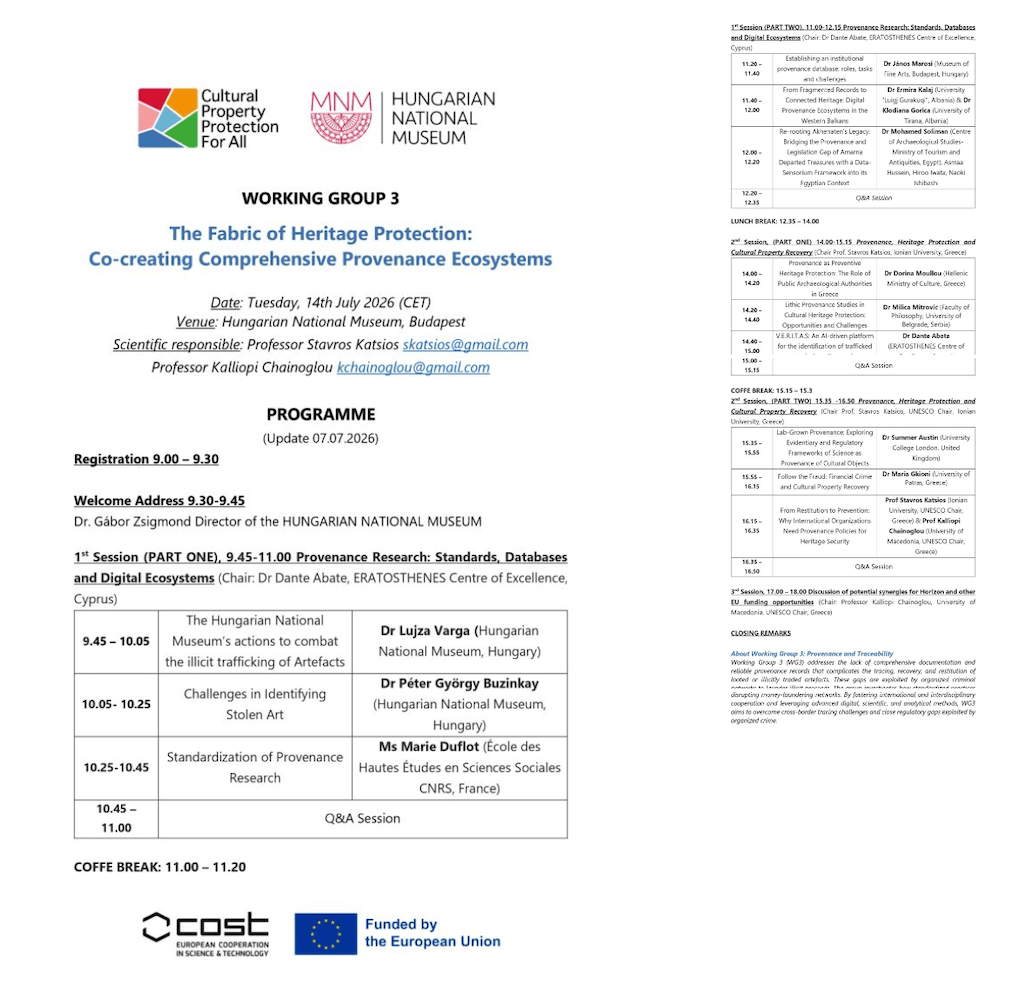
 Workshop programme